Practice
Fall prevention exercises: how to relearn your balance at any age.
Falls aren't a matter of fate. The research is clear: people who practise their balance fall less often. What matters is starting early and practising safely.
The BodyIQ editorial team · 10 October 2026 · 5 min read
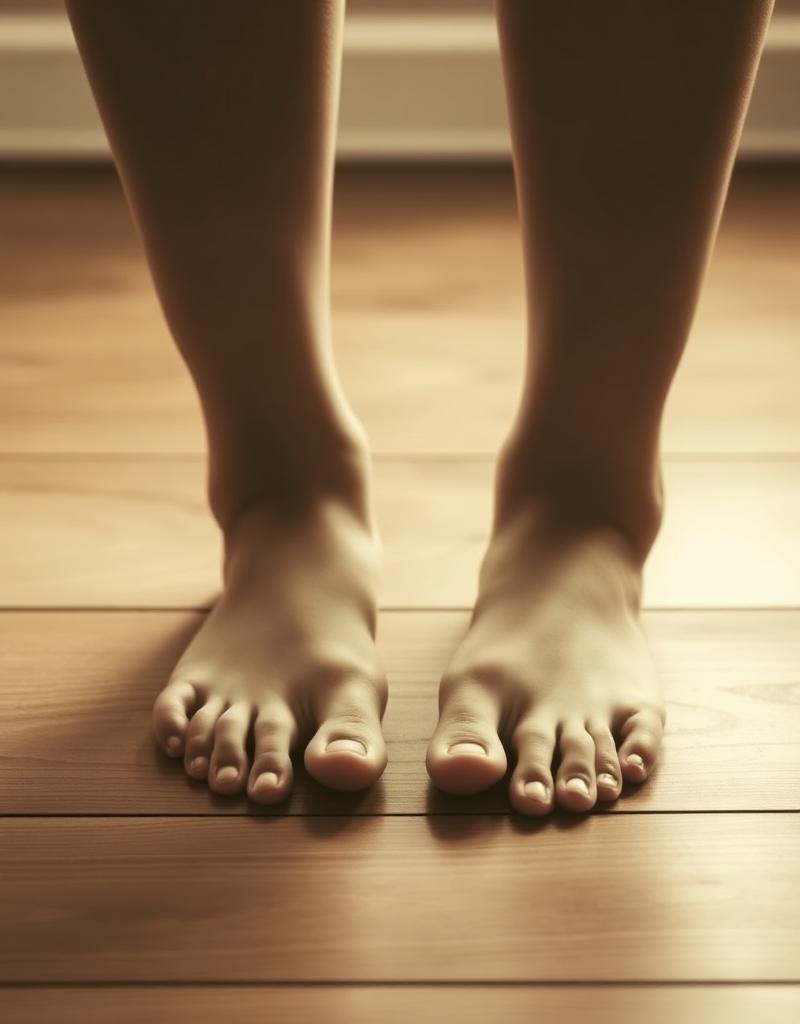
Tripping over the edge of a rug, a hurried step out of the bath, a moment of dizziness as you stand up. Most falls happen at home, in the middle of everyday life. And afterwards, many people are left above all with one thing: fear of the next fall.
That fear often leads people to move less. Which is exactly what makes them less steady. The better way is the opposite: practise your balance before anything happens.
What the research shows
Here the evidence is unusually clear. A Cochrane review (Sherrington et al., 2019) analysed 108 studies with more than 23,000 participants. The result: exercise programmes reduce the number of falls among older people living at home by around 23 per cent. The exercises studied most often were those for balance and everyday function.
There are also indications for the Feldenkrais Method. A systematic review with meta-analysis (Berland et al., 2022) found clear improvements in gait, balance, mobility and quality of life among older people in three out of four studies. The number of studies is small, however.
Why balance is more than muscle strength
Standing steadily comes from the interplay of three systems: the balance organ in the inner ear, the eyes, and proprioception – the sense of where your own body is. With age, all three become less precise. The good news is that the nervous system remains able to learn. More on this in the article Proprioception explained simply.
That's why fall prevention isn't only about strength in the legs. It is also about shifting your weight finely, balancing out small sways, and taking a step at the right moment.
The lesson: shifting your weight – 5 minutes
The lesson
Shifting your weight
5 minStanding, with support- Step 1
Stand safely
30 secStand behind a sturdy chair or at the kitchen worktop and rest both hands lightly on it. Your feet are hip-width apart. Sense how your weight is spread over both feet.
- Step 2
From right to left
75 secSlowly shift your weight a little more onto your right foot, then back to the centre, then onto your left. Your feet stay on the floor. Eight times. Notice how your knees and pelvis move along with it.
- Step 3
From front to back
75 secNow slowly shift your weight a little more onto the balls of your feet, then back to the centre, then a little more onto your heels. Only so far that your toes and heels stay on the floor. Eight times.
- Step 4
One foot becomes light
60 secShift your weight onto your right foot until your left foot becomes very light. It doesn't have to leave the floor. Stay like this for one breath, then return to the centre. Then the other side. Four times each.
- Step 5
Compare
60 secStand quietly on both feet with your hands on the back of the chair. How is your weight distributed now? Does your stance feel different from the beginning?
Safety: Always practise with something to hold on to within reach, and in sturdy shoes or barefoot on a non-slip floor – not in socks on a smooth surface. If you feel dizzy, sit down.
Three things that help quickly at home
- Light. A night light in the hallway and next to the bed prevents many falls at night.
- Trip hazards. Loose rugs, cables and thresholds are the most common triggers. A walk round your home with this in mind is well worth it.
- Regularity. The World Health Organization recommends that older people train their balance and strength on at least three days a week. A few minutes a day is a good start.
Frequently asked questions
Which exercises help prevent falls?
The best-studied exercises are those for balance and everyday function, such as shifting your weight, getting up from a chair and walking with small changes of direction. Strength training for the legs helps as well. What matters is practising regularly and safely.
How often should seniors train their balance?
The World Health Organization recommends that older people train their balance and strength on at least three days a week. Short daily sessions are often easier to keep up than long, infrequent ones.
Can you still improve your balance as you get older?
Yes. The nervous system remains able to learn at any age. Studies show that older people, too, can improve their balance through regular practice.
Does Feldenkrais help with fear of falling?
Some studies show improvements in balance and gait. Many people also find that the slow, attentive work helps them regain confidence in their movement. The research is still limited, though.
Sources
- Sherrington C, Fairhall NJ, Wallbank GK, et al. Exercise for preventing falls in older people living in the community. Cochrane Database of Systematic Reviews. 2019;(1):CD012424. pedro.org.au
- Berland R, et al. Effects of the Feldenkrais Method as a Physiotherapy Tool: A Systematic Review and Meta-Analysis of Randomized Controlled Trials. International Journal of Environmental Research and Public Health. 2022;19(21):13734. doi.org
- World Health Organization. WHO guidelines on physical activity and sedentary behaviour. Geneva: WHO; 2020. who.int
This article offers orientation and does not replace medical diagnosis or treatment. Feldenkrais is movement education.
The BodyIQ Brief · once a month at most
What actually helps. Once a month.
A new piece from the magazine, a lesson to try at home and new teachers in the directory. For teachers, there's also what's working for visibility right now. No spam, one click to unsubscribe.

Kostenlose Lektion
Die 5-Minuten-Lektion — spür den Unterschied heute.
Vier sanfte Übungen für zuhause. Plus die Wissenschaft dahinter, warum schon wenige Minuten deinem Nervensystem zeigen, was möglich ist.