Practice
Parkinson's exercises: why movement matters so much – and how it can become easier.
Parkinson's changes the way movement comes about. That makes staying active all the more important. Research shows that regular practice can improve mobility, balance and gait.
The BodyIQ editorial team · 10 October 2026 · 5 min read
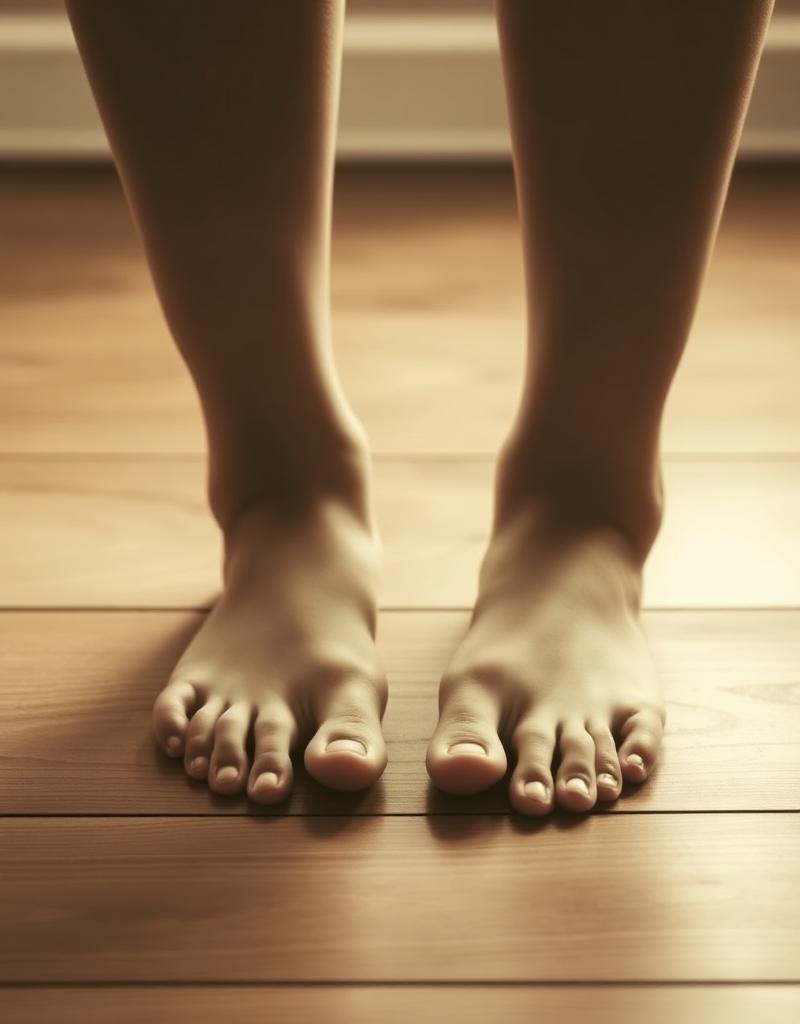
With Parkinson's, movements become smaller, slower and often more effortful. Getting up from a chair takes more of a run-up, steps get shorter, the arms swing less. Many people with the condition describe how movements that used to happen automatically suddenly have to be steered consciously.
And therein lies an opportunity too. What no longer runs automatically can be reorganised with attention.
Before you start: This article is no substitute for neurological treatment. Exercise complements the therapy agreed with your neurologist, including physiotherapy, occupational therapy and speech and language therapy.
What the research shows
Exercise is one of the best-studied companions in Parkinson's. A meta-analysis (Radder et al., 2020) shows that various active forms of physiotherapy can improve motor symptoms, balance and gait. The approaches studied included conventional physiotherapy, treadmill training, training with cueing, dance and tai chi.
On the Feldenkrais Method in Parkinson's, there are so far only a few small studies. A Brazilian research group (Teixeira-Machado et al.) examined the method in two randomised trials, one on quality of life (2015) and one on everyday function (2017). The methodological quality of these studies is rated 5 out of 10 in the PEDro database. That is an interesting start, but not yet firm evidence.
What Feldenkrais does differently
Many Parkinson's programmes work with large, powerful movements and clear external cues. That approach is well studied and makes sense. The Feldenkrais Method starts somewhere else: it breaks everyday movements such as standing up, turning or walking into small parts and lets you sense how they connect. That can help you consciously reorganise movements when they no longer happen by themselves.
The two approaches aren't mutually exclusive. Many people combine vigorous exercise programmes with calm awareness work.
The lesson: standing up more easily – 5 minutes
The lesson
Standing up more easily
5 minSeated, with support- Step 1
Sit securely
30 secSit on a sturdy chair without wheels, ideally one with armrests. Your feet are flat and hip-width apart, slightly behind your knees. If you feel unsteady, there should be a second person nearby.
- Step 2
Walk on your sitting bones
60 secSlowly shift your weight a little more onto your right buttock, then back to the centre, then onto your left. Six times. Notice how your upper body moves along with it.
- Step 3
Lean forward
75 secKeeping your back straight, slowly tilt your upper body forward, as if your nose were travelling towards your toes. Sense how your weight comes onto your feet as you do this. Then come back. Six times, without standing up.
- Step 4
Your seat becomes light
60 secLean forward again until your bottom becomes lighter on the chair. It doesn't have to lift off. Stay like this for one breath, then sit back. Four times.
- Step 5
Stand up
45 secIf it feels safe, lean forward, push down on the armrests with your hands and use the momentum of the forward movement to come up to standing. Stand for a moment, then slowly sit back down.
Safety: It's best to practise during a phase when your mobility is good. If you are prone to falls, only do the lesson up to step 4, or do it together with a physiotherapist.
Frequently asked questions
Which exercises help with Parkinson's?
Well-studied options include active forms of exercise such as physiotherapy with balance and gait training, treadmill training, dance and tai chi. Which exercises suit you is best discussed with your physiotherapist or your neurologist.
How often should you exercise with Parkinson's?
Regularity matters more than intensity. Many programmes recommend being active several times a week. Short daily sessions are often easier to fit into everyday life.
Does Feldenkrais help with Parkinson's?
There are some early, small studies with positive indications for quality of life and everyday function. Firm scientific evidence is still lacking. Many people with Parkinson's find the method a helpful complement for steering their movements more consciously.
Can exercise slow Parkinson's down?
Exercise can ease symptoms and help you keep your mobility and independence for as long as possible. Whether it slows the progression of the disease itself is still being researched.
Sources
- Radder DLM, Lígia Silva de Lima A, Domingos J, Keus SHJ, van Nimwegen M, Bloem BR, de Vries NM. Physiotherapy in Parkinson's disease: a meta-analysis of present treatment modalities. Neurorehabilitation and Neural Repair. 2020;34(10):871–880. doi.org
- Teixeira-Machado L, Araujo FM, Cunha FA, Menezes M, Menezes T, Melo de Santana J. Feldenkrais method-based exercise improves quality of life in individuals with Parkinson's disease: a controlled, randomized clinical trial. Alternative Therapies in Health and Medicine. 2015;21(1):8–14. pedro.org.au
- Teixeira-Machado L, de Araujo FM, Menezes MA, et al. Feldenkrais method and functionality in Parkinson's disease: a randomized controlled clinical trial. International Journal on Disability and Human Development. 2017;16(1):59–66. doi.org
This article offers orientation and does not replace medical diagnosis or treatment. Feldenkrais is movement education.
The BodyIQ Brief · once a month at most
What actually helps. Once a month.
A new piece from the magazine, a lesson to try at home and new teachers in the directory. For teachers, there's also what's working for visibility right now. No spam, one click to unsubscribe.
Kostenlose Lektion
Die 5-Minuten-Lektion — spür den Unterschied heute.
Vier sanfte Übungen für zuhause. Plus die Wissenschaft dahinter, warum schon wenige Minuten deinem Nervensystem zeigen, was möglich ist.