Related method · Sister of Feldenkrais
Alexander Technique: noticing habits before they start to hurt.
The Alexander Technique shows you how you create unnecessary tension in everyday life, when sitting, standing, speaking or playing an instrument. And how to learn to leave it out.
01, In one sentence
The Alexander Technique is a learning method that helps you recognise unhelpful movement habits, pause, and choose an easier way, especially in how your head, neck and back work together.
02, Where it comes from
An actor who kept losing his voice.
Frederick Matthias Alexander (1869–1955) was an actor in Australia. In the 1890s his voice kept failing him on stage, and doctors could find nothing wrong. So he watched himself in the mirror and saw that, every time he spoke, he pulled his head back and tightened his whole body without noticing. His method grew out of that self-observation.
03, What a lesson looks like
Everyday life as the practice ground.
- Usually one-to-one, around 30 to 45 minutes.
- You work with ordinary movements: sitting, standing up, walking, bending.
- The teacher guides you with light hands and clear words. No massage, no force.
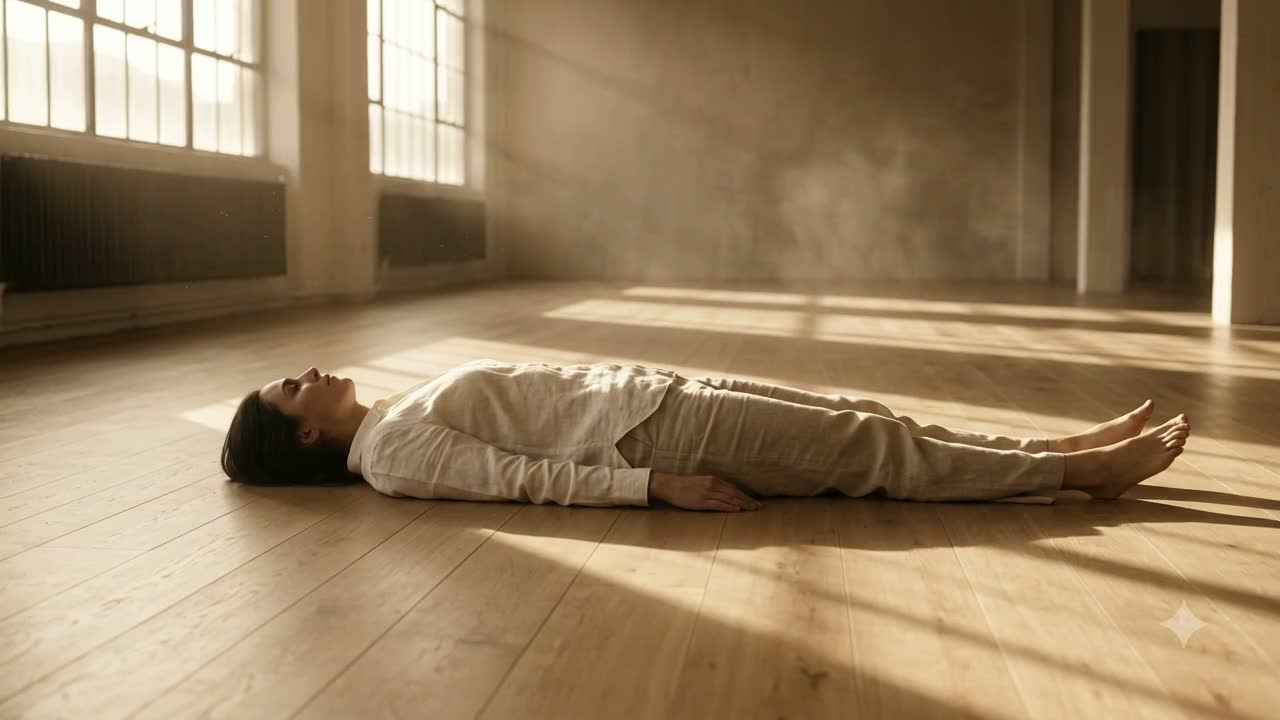
- Lessons often include time lying in semi-supine.
- Many teachers also offer group classes and workshops.
04, Who it's for
For anyone who sits, speaks or performs a lot.
- Recurring back and neck pain
- Desk work and long hours of sitting
- Voice, speaking, stage fright
- Music, dance, theatre
- Sport that depends on fine coordination
05, What the research shows
An honest view.
Two large randomised trials studied the Alexander Technique for specific conditions. In the UK ATEAM trial (BMJ 2008, 579 people with chronic or recurrent back pain), 24 one-to-one lessons led to fewer limitations in daily life and fewer days in pain after a year compared with usual care. In the ATLAS trial (Annals of Internal Medicine 2015, 517 people with chronic neck pain), 20 Alexander lessons improved pain-related disability at twelve months compared with usual care; the additional effect was moderate. These findings do not establish benefits for every condition.
For many other uses the evidence is thin. The Alexander Technique is teaching, not treatment, and it doesn't replace a medical assessment.
06, Alexander Technique and Feldenkrais
Two pioneers, one question.
Neither method asks "what's broken?". Both ask "how are you doing that?". The Alexander Technique works mainly with everyday actions and the moment of pausing. Feldenkrais explores, in slow variations and often lying down, how many ways there are to make one movement. If you know both, you get the best of both.
07, Find a teacher
Trained, and with a seal.
The German professional association ATVD requires at least three years and 1,600 hours of teacher training. Professional associations maintain teacher directories; standards can vary by association. On The BodyIQ the seal shows you what we have checked.
Sample profiles
People behind the method
Fictional examples, not bookable teachers. Names and offers are samples, not verified profile information.
Fictional sample
Clara Beispiel
Alexander Technique
Alexander Technique teacher
- Everyday movement
- Posture
- Voice
Frequently asked questions
Sources
The Alexander Technique is movement education and does not replace medical treatment.